Why Are Tulips Associated with the Netherlands? A Brief History
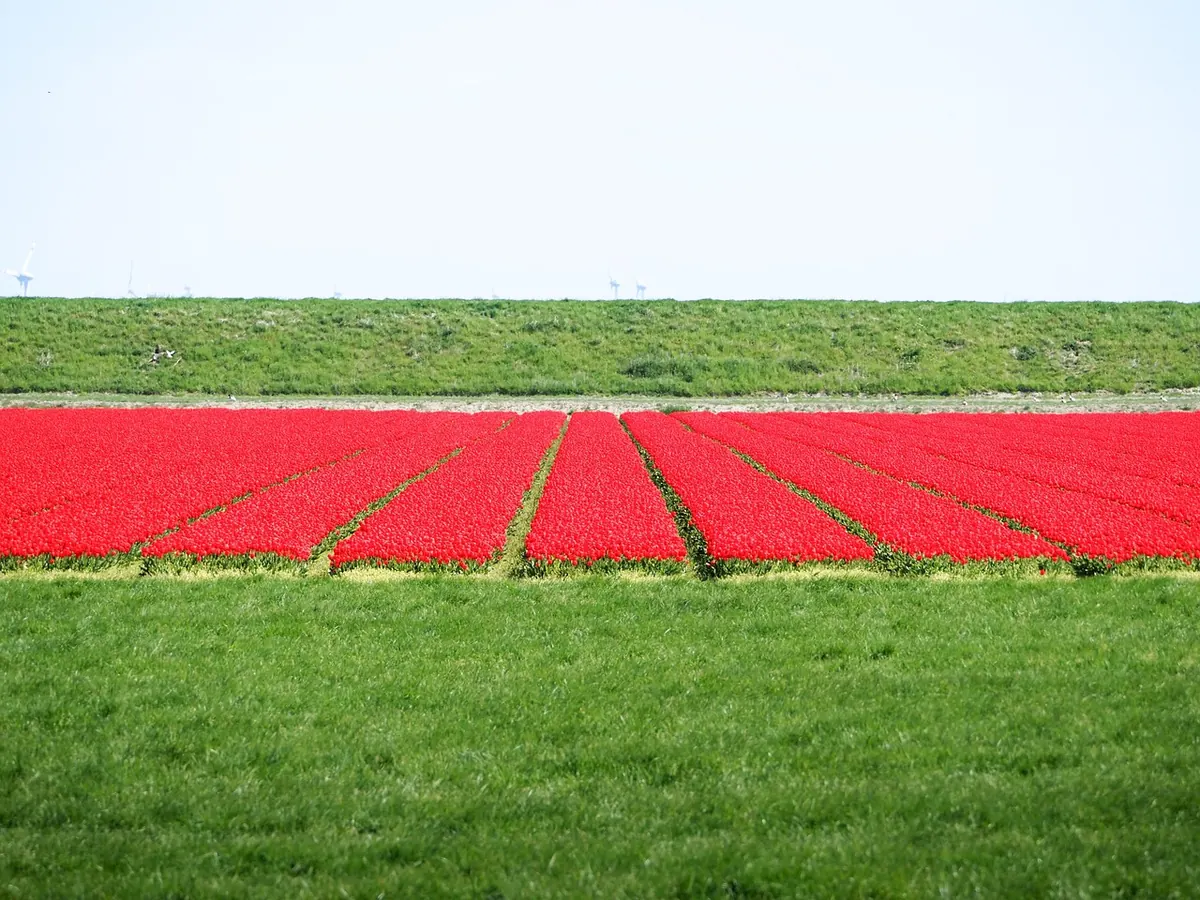
Ask anyone to picture a tulip field and they will almost certainly place it in the Netherlands: flat horizons, rows of colour, a windmill somewhere at the edge of the frame. The association is so strong that it is easy to forget the tulip is not Dutch at all. It arrived in Europe by a roundabout route, was treasured long before the first Dutch grower sank a spade into a polder, and only later became the signature flower of a country that turned bulb-growing into an industry.
From Persian gardens to Ottoman palaces
Tulips are wildflowers of a great belt of country running through Central Asia, Iran and the Caucasus, where they grow in mountain meadows and steppe that bake in summer and freeze in winter. It was in Persia that they were first taken into gardens and bred for colour, and from there they travelled westward with trade and conquest into the Ottoman world.
By the sixteenth century, tulips were a fixture of Ottoman court gardens, grown with the same seriousness that later European collectors brought to orchids. Sultan Suleiman the Magnificent was known to prize them, and the flower's hold on Turkish taste lasted for centuries; the early eighteenth-century court period in Istanbul is still remembered as the Tulip Era. The name itself usually traced back through Turkish to a Persian word for turban, a nod to the shape of the flower when partly open.
The ambassador's bulbs and a Leiden garden
The usual story credits Ogier Ghiselin de Busbecq, a Habsburg ambassador sent to the Ottoman court in the 1550s, with sending seeds and bulbs home to a friend: Carolus Clusius, a botanist with an appetite for the unfamiliar. Clusius later moved to Leiden, where he planted tulips in the university's new botanical garden in the 1590s. Whether Busbecq alone deserves the credit is still argued by historians — bulbs also travelled with merchants, diplomats and other collectors — but Clusius's garden at Leiden matters either way. It became a place where anyone with money and curiosity could see the flower, and where the knowledge of how to grow it was passed on.
From Leiden, bulbs moved quickly into private Dutch and Flemish collections. They were expensive, unfamiliar and difficult to propagate quickly, which is precisely the combination that sets off a fashion.
Tulip mania and the Dutch Golden Age
By the 1630s, tulips were being bought and sold in Dutch towns with a fervour that has never quite been forgotten. Traders met in taverns and tavern-like rooms, dealing in bulbs that were still in the ground, and the sums offered for rare varieties climbed astonishingly through late 1636 before collapsing in the winter of 1637.
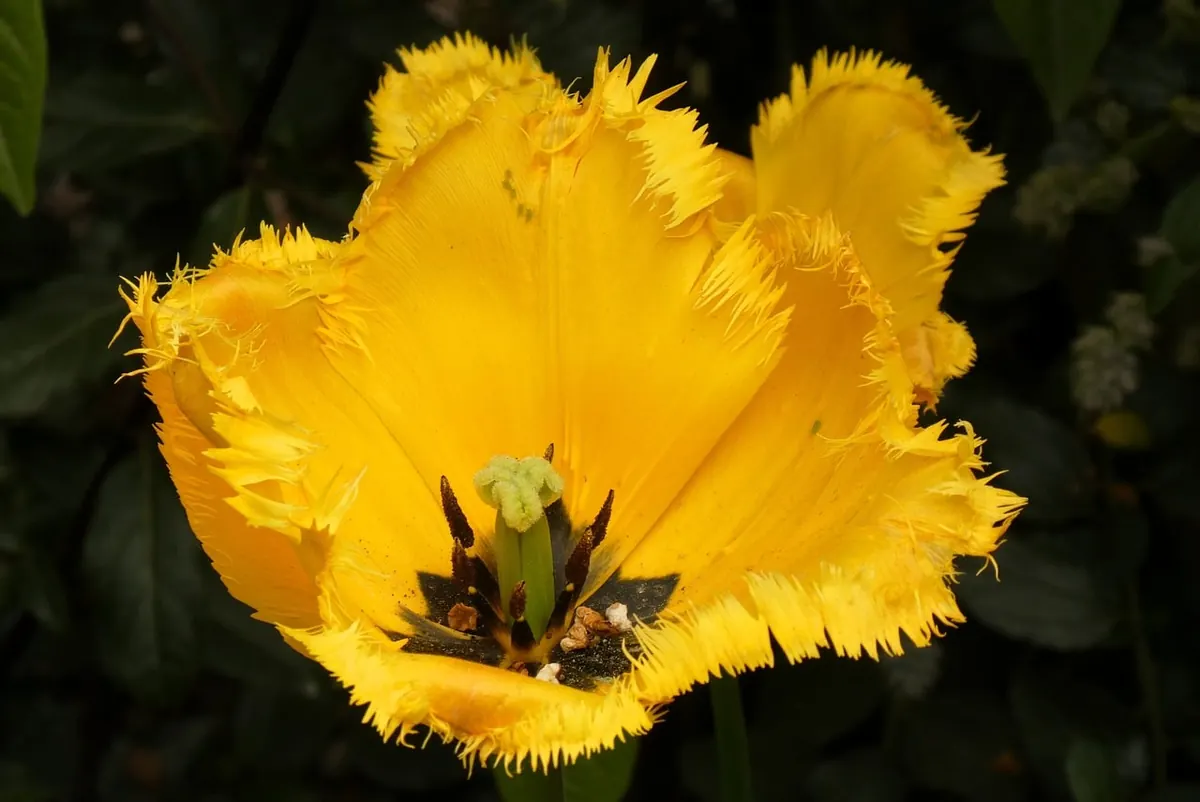
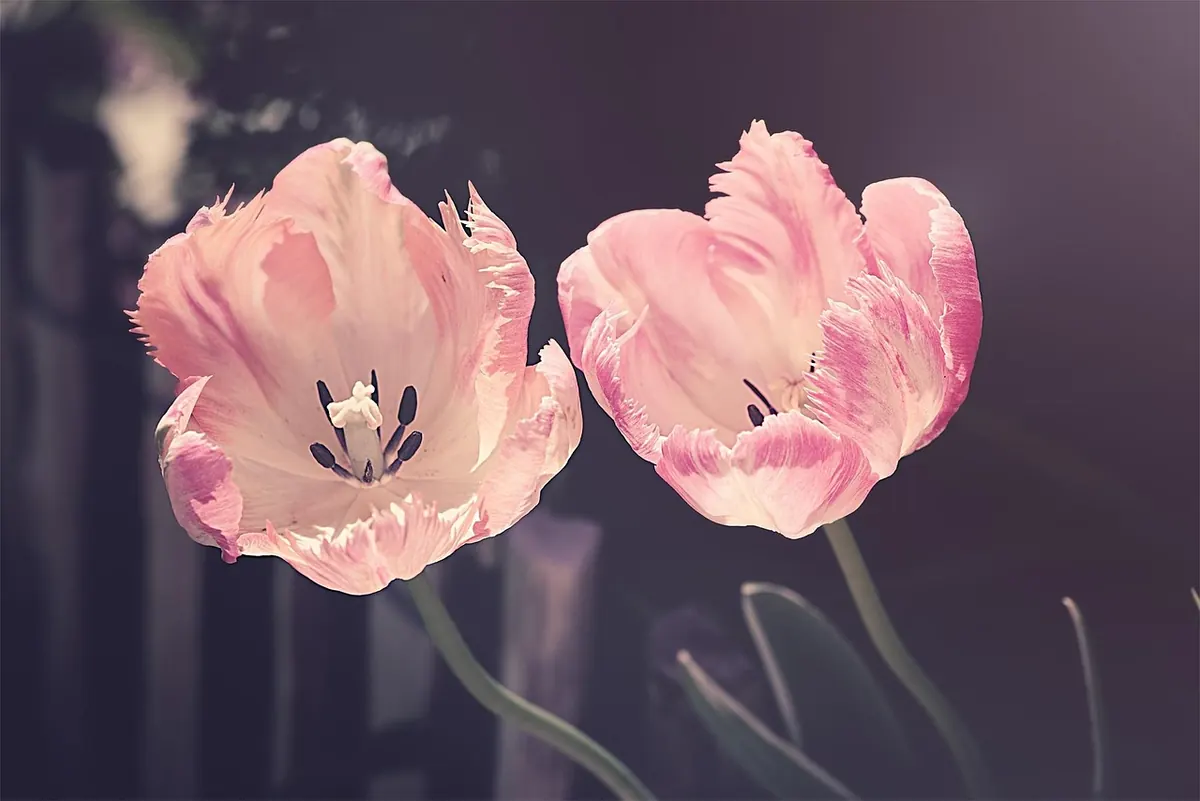
The petals that made those bulbs so desirable were striped and feathered in flame-like patterns, and the cause was a virus spread by aphids. A broken tulip is a sick tulip, and the virus weakened the plant — which is one reason the supply of spectacular bulbs stayed so tight. Nobody understood that at the time. What buyers saw was rarity, and rarity has always been expensive.
Modern historians disagree about how far tulip mania reached beyond a relatively narrow circle of buyers, and how much damage the crash really did. What is not in doubt is that the episode left the Netherlands with something more valuable than the bulbs themselves: a body of expertise.
Why the Netherlands, of all places?
The flower could have settled anywhere. The Dutch made a business of it, and their advantages were practical rather than romantic:
- Sandy, free-draining soils along the coast, which suit bulbs far better than heavy clay
- A mild, maritime climate with cool springs and few sharp frosts at the wrong moment
- Polders that could be drained and managed, giving growers large, uniform fields
- Wealthy merchants with capital to invest, and ships to carry bulbs abroad
- A trading culture that already knew how to grade, pack, auction and export a perishable product
- Growing concentration of know-how around Haarlem, and later the fields near Lisse, Hillegom and Noordwijkerhout
Those close-packed fields survive as a landscape and as a marketing machine. Keukenhof, the spring exhibition garden that opens for a few weeks each year, is the most visible piece of it. The Netherlands remains the largest producer of flower bulbs in the world, and a large share of the tulips sold in British garden centres and supermarkets began life in a Dutch field.
The tulip comes to Britain
Tulips reached Britain in the same late sixteenth-century wave. They appear in John Gerard's Herball of 1597, and by the following century they were being grown by gentlemen gardeners who treated a new variety as a status symbol every bit as much as their Dutch neighbours did.
The more interesting English chapter came later. From the eighteenth century, working men in the Midlands and the north — the "florists", as they were known — bred tulips to a strict show standard, judging blooms on shape, colour and the clean edges of their markings. Clubs met in pubs, staged competitions, and argued over whether a particular bloom showed "feathering" or "flaming". It was a working-class flower culture as serious as anything in the trading rooms of Amsterdam, and it left us the English florists' tulips still grown by specialist societies today.
How the Dutch model shaped British growing
Commercial growing in Britain took its own shape. Lincolnshire, around Spalding, became the centre of the cut-flower trade and built a spring parade around its fields that ran for more than half a century. Growers in Cornwall and on the Isles of Scilly used mild coastal conditions to produce early blooms. The Royal Horticultural Society's spring shows and the Chelsea Flower Show have kept tulips in front of British gardeners, and the modern cut-flower trade now leans on British-grown stems alongside imported ones.
What Britain never quite did was compete on volume. Dutch growers had scale, research and centuries of accumulated technique. British growers found their niche in early crops, cut flowers and named garden varieties.
Growing tulips here: a practical note
The Dutch connection is easy to bring home. English-grown species tulips (the wild types — Tulipa tarda, T. sprengeri, T. kaufmanniana) will naturalise if they are given sun and sharp drainage, and will come back year after year. The big bedding varieties are usually best treated as a glorious one-season investment.
In borders and pots
- Plant from October to late November, while the soil is still workable.
- Set bulbs at roughly three times their own depth, pointed end up, in good light.
- Improve heavy clay with grit and compost; standing water in winter is what kills bulbs.
- In containers, use fresh compost and plant more closely than you would in the ground.
- Water in pots through dry spells in spring, but never let them sit in a saucer of water.
- Deadhead as the flowers fade, then leave the foliage for about six weeks before cutting it back. The leaves are feeding next year's bulb.
- Where drainage is poor, treat tulips as annuals, lift them after flowering and start again with fresh bulbs.
Buy top-size, firm bulbs from a reputable supplier, keep an eye on aphids in spring, and you will see why a flower that crossed continents and started a bubble in Amsterdam still earns its place in a British garden.
Photo: ClickerHappy / Pixabay