Top 10 Tulip Varieties for UK Gardens
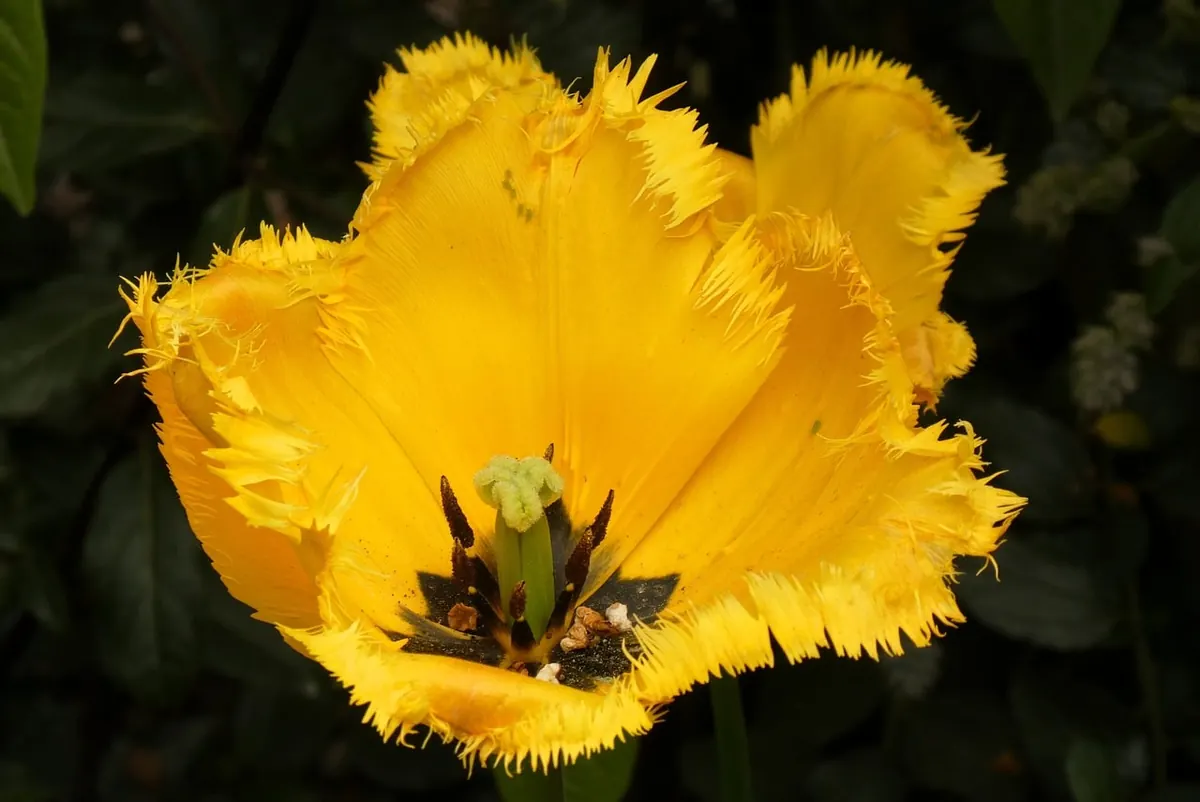
Tulips have a reputation for being a one-spring wonder: magnificent in their first year, then a straggle of leaves and the odd stunted flower. It is only half deserved. Plenty of varieties come back well in British gardens, given sun, sharp drainage and a few simple rules, while others are better treated as an annual and planted fresh each autumn. The key is to choose the right variety for your conditions, plant deeply, and leave the foliage to die back naturally. The ten below earn their place in borders, pots and cutting patches, and between them they cover the season from the first flowers in late March to the last in late May.
Early tulips: the first flowers of the year
The earliest varieties are the smallest and the toughest. They open in March or early April, often before the worst of the wind and rain has passed, and they are the most likely to settle in and multiply.
'Purissima'
Sometimes sold as 'White Emperor', this carries ivory-white flowers that open wide and flat in the sun, on stems of about 40cm. The leaves are broad and low, so it suits the front of a border or a pot you walk past daily. Fosteriana tulips such as this one are among the best for returning; leave the foliage undisturbed for six weeks after flowering and it will usually perform again the following spring. It also works well naturalised in grass, provided the grass is not cut until the leaves have yellowed.
'Showwinner'
The earliest of the ten, often in flower by mid-March. It reaches roughly 20cm, which makes it ideal for the front of a bed, a rockery or a shallow pot. The leaves are glossed with purple and held close to the ground, so the plant stays tidy even after the flower has gone over. Plant it with grape hyacinths for a low, early combination that needs no staking.
Mid-season: the April workhorses
April is the busiest month in the tulip year. Triumphs and Darwin hybrids open now, and this is the group that copes best with British weather. They are the ones to choose if you want a display that shrugs off wind and rain without collapsing.
'Prinses Irene'
Orange petals, each marked with a purple flame, and a scent you only notice when you get close. At around 35cm it takes wind better than taller varieties. Plant it beside a path or a doorstep, where you will actually catch the perfume. It pairs beautifully with dark purple wallflowers or forget-me-nots.
'Negrita'
A rich violet-purple with a slight sheen, flowering at about 45cm. It is a strong colour for pairing: set it against orange, or use it to darken a planting of white tulips. In dull light it reads almost black, which is no bad thing in a border. Try it with 'Spring Snow' for a crisp, high-contrast scheme.
'Apeldoorn'
A Darwin hybrid, scarlet with a butter-yellow base, on sturdy 55cm stems. Choose this one if you want tulips for cutting or if your garden is exposed, because the stems rarely flop. Lift and divide congested clumps after the foliage has died down to keep the flowers full-sized. It is also one of the best for perennialising, often increasing in number year on year.
'Spring Snow'
Pure white and generous, flowering alongside 'Apeldoorn' on similar stems. White tulips show every mark, so plant them away from bare soil that splashes in heavy rain, or mulch around them with compost. They look superb against a dark hedge or in a pot with dark purple 'Negrita'.
Late tulips: the May finale
These are the varieties that carry the season into late May, when the rest of the garden has finally caught up. Many are taller and more flamboyant, so give them a spot where they can be appreciated without being battered by wind.
'Ballerina'
A lily-flowered tulip with pointed, reflexed petals in warm orange-red, and a genuine scent. About 50cm tall, flowering from late April. It is one of the few tulips that looks as good in a vase as it does in the ground. Stake it if your garden is exposed, or plant it among hardy geraniums that will hide the stems.
'Angelique'
Soft pink, fully double and ruffled, with the look of a peony. It flowers in late May at around 45cm. The heavy heads can catch wind, so plant it in a sheltered spot or among sturdy perennials. It is superb for cutting, though the blooms last only a week or so in the ground. Because it is a double, it is best treated as an annual in most gardens; the bulbs rarely have enough energy to repeat the display.
'Queen of Night'
The darkest of all tulips, with deep maroon petals that appear almost black. It reaches 60cm and flowers in May, making it a dramatic vertical accent. Use it at the back of a border or in a large pot, where its colour can be set against lime-green euphorbia or silver foliage. Like most single late tulips, it may not return reliably, so replant each autumn for the best effect.
'China Town'
A late-flowering tulip with soft pink petals edged in white, growing to about 40cm. It is more delicate than the doubles but no less useful, bridging the gap between the last daffodils and the first alliums. Plant it in generous drifts for a soft, romantic look, or mix it with 'Ballerina' for a warm pink-and-orange combination.
Getting tulips to come back year after year
Some tulips are reliably perennial, others are not. The difference lies in the variety, the soil and the aftercare. Follow these rules and you will get more than one spring from your bulbs.
- Choose the right types. Fosteriana, Greigii and Darwin hybrids are the best returners. Double late and parrot tulips are often best treated as annuals.
- Plant deeply. Set bulbs three times their own depth — about 15–20cm for large tulips. Deep planting keeps them cool, stable and less likely to split into small, non-flowering bulbs.
- Feed at the right time. Apply a balanced fertiliser when the leaves first appear, not after flowering. This feeds the bulb as it builds energy for next year.
- Leave the foliage for six weeks. Do not tie it, cut it or hide it with annuals until it has turned yellow and papery. The leaves are the bulb's solar panel.
- Keep them dry in summer. Tulips originate from hot, dry mountainsides. A baking in summer helps them go dormant cleanly. If your soil is wet, lift the bulbs and store them in a cool, dry shed.
Three easy colour combinations for UK gardens
Tulips are easy to combine because their season is short and their colours are bold. Here are three tried-and-tested schemes that work in borders or pots.
- Sunrise: 'Purissima' + 'Prinses Irene' + 'Ballerina'. Ivory, orange and warm red. Plant them in layers in a large pot, with the tallest at the back and the earliest at the front.
- Night and day: 'Negrita' + 'Spring Snow'. Violet-purple against pure white. This is crisp, modern and looks wonderful against dark evergreen hedging.
- Soft romance: 'Angelique' + 'China Town' + 'Queen of Night'. Pink, pink-and-white, and near-black. The dark tulip adds depth without overwhelming the softer tones.
Whichever you choose, plant in autumn, water well after planting, and then leave them alone until spring. Tulips ask for very little, but they reward a little planning with a display that lifts the whole garden just as the year is getting going.
Photo: Elsemargriet / Pixabay